The World Porifera Database
The WPD, the World Database of all Recent sponges ever described, is part of the World Register of Marine Species (WoRMS), a global initiative to arrive at a register of all marine organisms.
The WPD is complementary to the Systema Porifera (editors Hooper & Van Soest, 2002),
the two volume comprehensive classification of all sponge taxa above the species level. It incorporates recent and future amendments of the sponge classification, including the recently proposed revision of Morrow & Cárdenas (2015).
|

|
Porifera news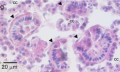 Reproduction and Development in Calcareous SpongesAdded on: 2026-09-29 15:13:52 by Boury-Esnault, Nicole Cajado, B.; Lanna, E. (2026). Reproduction and Development in Calcareous Sponges: A Panorama of the Last Two Centuries. Molecular Reproduction and Development. 93 (7): 1-23. ...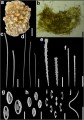 New Clathria from rhodolith bedsAdded on: 2026-09-25 14:27:21 by Boury-Esnault, Nicole Barros, T.; Pinheiro, U. (2026). Two New Clathria Schmidt, 1862 (Porifera: Microcionidae) From Rhodolith Beds in the Southwest Atlantic, Brazil. New Zealand Journal of Zoology. 53(3). ...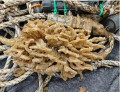 New record of the freshwater sponge Ephydatia fluviatilis from Lake Sibaya, South AfricaAdded on: 2026-09-21 16:41:39 by Boury-Esnault, Nicole Samaai, T.; Erpenbeck, D.; Janson, L.; Rensburg, S.J.V. (2026). New record of the freshwater sponge Ephydatia fluviatilis (Linnaeus, 1759) (Demospongiae: Spongillida) from Lake Sibaya, South Africa: morphological and molecular insights. Zootaxa. 5881(2): 192-208. ...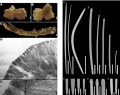 Clionaidae from North Eastern Brazil including a new species of ClionaopsisAdded on: 2026-09-19 17:25:02 by van Soest, Rob W.M. Nascimento, E.F.; Bento, R.V.; Pinheiro, U. (2026) Clionaidae From Northeastern Brazil: A new species of Clionaopsis (Rützler 2002), redescription of Spheciospongia symbiotica (Hechtel 1983), and new records of Cervicornia cuspidifera (Lamarck 1815). New Zealand Journal of Zoology, 53, e70059 ...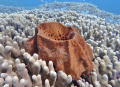 Moving Rhabdastrella to the GeodiidaeAdded on: 2026-09-09 19:56:18 by Cárdenas, Paco Cárdenas, P.; Gamage, J.; Zumberge, J.A.; El-Seedi, H.; Díaz, J.A.; Huang, Y.M.; Vacelet, J.; Marshall, N.L.; Ekins, M.; Jayasinghe, R.P.P.K.; Hettiarachchi, C.M.; Love, G.D.; Gunasekera, S. (2026) Morphological, molecular, and chemical characters support the transfer of the tropical demosponge genus Rhabdastrella to the family Geodiidae. Zoological Journal of the Linnean Society, 208(1). ...
[Add] [Older news... ]
|
|
The aim for the WPD is to be a catalogue of sponge species in a continuously updated, fully hierarchical system to promote stability of sponge names, to serve the community of users of sponge names, and to act as a tool for higher taxon revisions and regional monographs. A further aim is to be the world’s comprehensive database for sponge type specimens and other important vouchered specimens. Additional information we are making available are (overview) distributions of all species and unaccepted name combinations occurring in the literature.
In order to have adequate expert knowledge we have formed an editorial committee consisting of:
and the following specialist colleagues:
- Alvarez, Belinda: Porifera (Axinellida, Bubarida, Scopalinida, Suberitida)
- Boury-Esnault, Nicole: Porifera (Homoscleromorpha, Keratosa, Polymastiida, Verongimorpha, Mediterranean fauna)
- Cárdenas, Paco: Porifera (Tetractinellida)
- Díaz, Maria-Cristina: Thematic editor: Porifera (Caribbean fauna)
- Dohrmann, Martin: Porifera (Hexactinellida)
- Downey, Rachel: Porifera (Antarctic)
- Goodwin, Claire: Porifera (Southern Ocean and parts of the Canadian Arctic)
- Hajdu, Eduardo: Porifera (Biemnida, Desmacellida, Poecilosclerida, South American fauna)
- Hooper, John N.A.: Porifera (Poecilosclerida, Australian fauna)
- Kelly, Michelle: Thematic editor: Porifera (New Zealand fauna)
- Klautau, Michelle: Porifera (Calcarea)
- Lim, Swee Cheng: Porifera (Indo-Pacific)
- Lukowiak, Magdalena: Porifera (fossil sponges)
- Manconi, Renata: Porifera (Spongillida, freshwater sponges)
- Morrow, Christine: Porifera (Heteroscleromorpha, North Atlantic fauna)
- Pinheiro, Ulisses: Porifera (Spongillida)
- Pisera, Andrzej B.: Porifera (desma-bearing and coralline sponges)
- Ríos, Pilar: Porifera (Poecilosclerida & thematic editor for Iberian and Northwest African regions)
- Samaai, Toufiek: Heteroscleromorpha (Western Indian Ocean, Temperate Southern Africa)
- Schönberg, Christine: Porifera (Clionaida, Siphonodictyon, Thoosidae)
- Turner, Thomas: Thematic editor: Porifera (NE Pacific)
- Vacelet, Jean: Porifera (Cladorhizidae, carnivorous sponges)
- van Soest, Rob W.M.: Porifera (Previous chief editor 2004/2021)
- Xavier, Joana: Porifera (Atlantic)
Editors are responsible for entries, decision on validity of names. Corrections and omissions may be addressed to the relevant editor or the general editor.
|

|
|
Currently (2026), there are 9,875 valid species (marine + non-marine) in the database (among almost 20,000 taxon names).
Acceptance is an editorial decision, but we acknowledge such decisions need to be re-examined frequently in the light of new information. If you disagree with senior synonymy decisions or genus assignments, please let us have your - argumented - corrected assignment. More info.
|
Who is who in sponge science
This global address list reflects information collated through annual surveys posted on mailing lists (PoriferaList, CoraList and Skolithos) and by contacting some people directly. The information was collected and made available by Christine Schönberg.
Sponge conference materials
This is a record of abstracts, proceedings and other materials from sponge meetings and symposia. CitationUsage of data from the World Porifera Database in scientific publications should be acknowledged by citing as follows:
- de Voogd, N.J.; Alvarez, B.; Boury-Esnault, N.; Cárdenas, P.; Díaz, M.-C.; Dohrmann, M.; Downey, R.; Goodwin, C.; Hajdu, E.; Hooper, J.N.A.; Kelly, M.; Klautau, M.; Lim, S.C.; Manconi, R.; Morrow, C.; Pinheiro, U.; Pisera, A.B.; Ríos, P.; Schönberg, C.; Turner, T.; Vacelet, J.; van Soest, R.W.M.; Xavier, J. (2026). World Porifera Database. Accessed at https://www.marinespecies.org/porifera on 2026-10-03. doi:10.14284/359
If the data from the World Porifera Database constitute a substantial proportion of the records used in analyses, the chief editor(s) of the database should be contacted. There may be additional data which may prove valuable to such analyses.
Individual pages are individually authored and dated. These can be cited separately: the proper citation is provided at the bottom of each page.
|