WoRMS taxon details
Pelagia noctiluca (Forsskål, 1775)
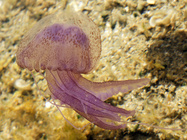
135305 (urn:lsid:marinespecies.org:taxname:135305)
accepted
Species
Medusa noctiluca Forsskål, 1775 · unaccepted (basionym)
Medusa perla Slabber, 1769 · unaccepted > junior subjective synonym (synonym)
Pelagia neglecta Vanhöffen, 1888 · unaccepted (synonym)
Pelagia parthenopensis Lesson, 1843 · unaccepted (synonym)
Pelagia perla (Slabber, 1781) · unaccepted (synonym)
Pelagia purpuroviolacea Stiasny, 1914 · unaccepted (synonym)
Pelagia rosacea Stiasny, 1914 · unaccepted (synonym)
marine, fresh, terrestrial
(of Medusa noctiluca Forsskål, 1775) Forskål P. (1775). Descriptiones Animalium, Avium, Amphibiorum, Piscium, Insectorum, Vermium; quae in Itinere Orientali Observavit Petrus Forskål. Post Mortem Auctoris editit Carsten Niebuhr. Adjuncta est materia Medica Kahirina. Mölleri, Hafniae, 19 + xxxiv + 164 pp. , available online at https://www.biodiversitylibrary.org/page/2088059
page(s): 109 [details]
page(s): 109 [details]
Distribution semi-cosmopolitan
Distribution Atlantic coast of Nova Scotia
Distribution semi-cosmopolitan [details]
Distribution Atlantic coast of Nova Scotia
Distribution Atlantic coast of Nova Scotia [details]
Collins, A.G.; Morandini, A.C. (2024). World List of Scyphozoa. Pelagia noctiluca (Forsskål, 1775). Accessed through: World Register of Marine Species at: https://marinespecies.org/aphia.php?p=taxdetails&id=135305 on 2024-09-23
Date
action
by
 The webpage text is licensed under a Creative Commons Attribution 4.0 License
original description
(of Medusa noctiluca Forsskål, 1775) Forskål P. (1775). Descriptiones Animalium, Avium, Amphibiorum, Piscium, Insectorum, Vermium; quae in Itinere Orientali Observavit Petrus Forskål. Post Mortem Auctoris editit Carsten Niebuhr. Adjuncta est materia Medica Kahirina. Mölleri, Hafniae, 19 + xxxiv + 164 pp. , available online at https://www.biodiversitylibrary.org/page/2088059
page(s): 109 [details]
original description (of Pelagia parthenopensis Lesson, 1843) Lesson, R. P. 1843. Histoire naturelle des zoophytes. Acalèphes. Librairie Encyclopédique de Roret, Paris. pp. i-vii, 1-596, plus atlas of 12 pls., available online at https://www.biodiversitylibrary.org/page/3803187
page(s): 392 [details]
original description (of Pelagia neglecta Vanhöffen, 1888) Vanhöffen, E. (1888). Untersuchungen über semäostome und rhizostome Medusen. <em>Bibliotheca Zoologica.</em> 1: 1-52.
page(s): 9-10 [details]
original description (of Pelagia purpuroviolacea Stiasny, 1914) Stiasny, G. (1914). Zwei neue Pelagiden aus der Adria. <em>Zoologischer Anzeiger.</em> 44: 529-533.
page(s): 529-531 [details]
original description (of Pelagia rosacea Stiasny, 1914) Stiasny, G. (1914). Zwei neue Pelagiden aus der Adria. <em>Zoologischer Anzeiger.</em> 44: 529-533.
page(s): 531-532 [details]
original description (of Medusa perla Slabber, 1769) Slabber, M. (1769). Natuurkundige verlustigingen, behelzende microscopise waarnemingen van in - en uitlandse water - en land-dieren. Eerste stukje. J. Bosch, Haarlem. 166 pp, 18 pls.
page(s): 109-110, pl. 13, fig. 2 [details]
context source (Deepsea) Intergovernmental Oceanographic Commission (IOC) of UNESCO. The Ocean Biogeographic Information System (OBIS), available online at http://www.iobis.org/ [details]
context source (RAS) Australian Antarctic Data Centre. , available online at https://data.aad.gov.au/aadc/biodiversity/ [details]
context source (Bermuda) Moore, H.B. (1949). The zooplankton of the upper waters of the Bermuda area of the North Atlantic. Bulletin of the Bingham Oceanographic Collection 12(2):1-97, figs. 1-208. (i-1949) [details] Available for editors [request]
context source (Hexacorallia) Fautin, Daphne G. (2013). Hexacorallians of the World. (look up in IMIS) [details]
basis of record Cornelius, P.F.S. (2001). Cubozoa, <B><I>in</I></B>: Costello, M.J. <i>et al.</i> (Ed.) (2001). <i>European register of marine species: a check-list of the marine species in Europe and a bibliography of guides to their identification. Collection Patrimoines Naturels,</i> 50: pp. 111 (look up in IMIS) [details]
additional source Larson, R.J. 1976. Marine flora and fauna of the northeastern United States. Cnidaria: Scyphozoa. NOAA Techical Report NMFS Circular 397. 18 p. [details]
additional source Linkletter, L. E. (1977). A checklist of marine fauna and flora of the Bay of Fundy. <em>Huntsman Marine Laboratory, St. Andrews, N.B.</em> 68: p. [details]
additional source Vine, P. (1986). Red Sea Invertebrates. Immel Publishing, London. 224 pp. (look up in IMIS) [details]
additional source Muller, Y. (2004). Faune et flore du littoral du Nord, du Pas-de-Calais et de la Belgique: inventaire. [Coastal fauna and flora of the Nord, Pas-de-Calais and Belgium: inventory]. <em>Commission Régionale de Biologie Région Nord Pas-de-Calais: France.</em> 307 pp., available online at http://www.vliz.be/imisdocs/publications/145561.pdf [details]
additional source Haeckel, E. (1880). Das System der Acraspeden. 2te Hälfte des Systems der Medusen. Acht Nachträge zur Vervollständigung des Systems. <em>Denkschriften der Medicinisch-Naturwissenschaftlichen Gesellschaft zu Jena.</em> 2: 361-672, plates 21-40., available online at https://www.biodiversitylibrary.org/page/32605982
page(s): 502, 504, 505, 506, 507, 508 [details]
additional source Segura-Puertas, L., L. Celis, and L. Chiaverano. 2009. Medusozoans (Cnidaria: Cubozoa, Scyphozoa, and Hydrozoa) of the Gulf of Mexico, Pp. 369–379 in Felder, D.L. and D.K. Camp (eds.), Gulf of Mexico–Origins, Waters, and Biota. Biodiversity. Texas A&M Pre [details]
additional source Liu, J.Y. [Ruiyu] (ed.). (2008). Checklist of marine biota of China seas. <em>China Science Press.</em> 1267 pp. (look up in IMIS) [details] Available for editors [request]
additional source Cairns, S.D., L. Gershwin, F.J. Brook, P. Pugh, E.W. Dawson, O.V.; Ocaña, W. Vervoort, G. Williams, J.E. Watson, D.M. Opresko, P. Schuchert, P.M. Hine, D.P. Gordon, H.I. Campbell, A.J. Wright, J.A.Sánchez & D.G. Fautin. (2009). Phylum Cnidaria: corals, medusae, hydroids, myxozoans. <em>in: Gordon, D.P. (Ed.) (2009). New Zealand inventory of biodiversity: 1. Kingdom Animalia: Radiata, Lophotrochozoa, Deuterostomia.</em> pp. 59-101., available online at https://repository.si.edu/handle/10088/8431 [details] Available for editors [request]
additional source Integrated Taxonomic Information System (ITIS). , available online at http://www.itis.gov [details]
additional source Howson, C.M. & B.E. Picton. (1997). The species directory of the marine fauna and flora of the British Isles and surrounding seas. <em>Ulster Museum Publication, 276. The Ulster Museum: Belfast, UK. ISBN 0-948150-06-8.</em> vi, 508 (+ cd-rom) pp. (look up in IMIS) [details] Available for editors [request]
page(s): 109 [details]
original description (of Pelagia parthenopensis Lesson, 1843) Lesson, R. P. 1843. Histoire naturelle des zoophytes. Acalèphes. Librairie Encyclopédique de Roret, Paris. pp. i-vii, 1-596, plus atlas of 12 pls., available online at https://www.biodiversitylibrary.org/page/3803187
page(s): 392 [details]
original description (of Pelagia neglecta Vanhöffen, 1888) Vanhöffen, E. (1888). Untersuchungen über semäostome und rhizostome Medusen. <em>Bibliotheca Zoologica.</em> 1: 1-52.
page(s): 9-10 [details]
original description (of Pelagia purpuroviolacea Stiasny, 1914) Stiasny, G. (1914). Zwei neue Pelagiden aus der Adria. <em>Zoologischer Anzeiger.</em> 44: 529-533.
page(s): 529-531 [details]
original description (of Pelagia rosacea Stiasny, 1914) Stiasny, G. (1914). Zwei neue Pelagiden aus der Adria. <em>Zoologischer Anzeiger.</em> 44: 529-533.
page(s): 531-532 [details]
original description (of Medusa perla Slabber, 1769) Slabber, M. (1769). Natuurkundige verlustigingen, behelzende microscopise waarnemingen van in - en uitlandse water - en land-dieren. Eerste stukje. J. Bosch, Haarlem. 166 pp, 18 pls.
page(s): 109-110, pl. 13, fig. 2 [details]
context source (Deepsea) Intergovernmental Oceanographic Commission (IOC) of UNESCO. The Ocean Biogeographic Information System (OBIS), available online at http://www.iobis.org/ [details]
context source (RAS) Australian Antarctic Data Centre. , available online at https://data.aad.gov.au/aadc/biodiversity/ [details]
context source (Bermuda) Moore, H.B. (1949). The zooplankton of the upper waters of the Bermuda area of the North Atlantic. Bulletin of the Bingham Oceanographic Collection 12(2):1-97, figs. 1-208. (i-1949) [details] Available for editors
[request] context source (Hexacorallia) Fautin, Daphne G. (2013). Hexacorallians of the World. (look up in IMIS) [details]
basis of record Cornelius, P.F.S. (2001). Cubozoa, <B><I>in</I></B>: Costello, M.J. <i>et al.</i> (Ed.) (2001). <i>European register of marine species: a check-list of the marine species in Europe and a bibliography of guides to their identification. Collection Patrimoines Naturels,</i> 50: pp. 111 (look up in IMIS) [details]
additional source Larson, R.J. 1976. Marine flora and fauna of the northeastern United States. Cnidaria: Scyphozoa. NOAA Techical Report NMFS Circular 397. 18 p. [details]
additional source Linkletter, L. E. (1977). A checklist of marine fauna and flora of the Bay of Fundy. <em>Huntsman Marine Laboratory, St. Andrews, N.B.</em> 68: p. [details]
additional source Vine, P. (1986). Red Sea Invertebrates. Immel Publishing, London. 224 pp. (look up in IMIS) [details]
additional source Muller, Y. (2004). Faune et flore du littoral du Nord, du Pas-de-Calais et de la Belgique: inventaire. [Coastal fauna and flora of the Nord, Pas-de-Calais and Belgium: inventory]. <em>Commission Régionale de Biologie Région Nord Pas-de-Calais: France.</em> 307 pp., available online at http://www.vliz.be/imisdocs/publications/145561.pdf [details]
additional source Haeckel, E. (1880). Das System der Acraspeden. 2te Hälfte des Systems der Medusen. Acht Nachträge zur Vervollständigung des Systems. <em>Denkschriften der Medicinisch-Naturwissenschaftlichen Gesellschaft zu Jena.</em> 2: 361-672, plates 21-40., available online at https://www.biodiversitylibrary.org/page/32605982
page(s): 502, 504, 505, 506, 507, 508 [details]
additional source Segura-Puertas, L., L. Celis, and L. Chiaverano. 2009. Medusozoans (Cnidaria: Cubozoa, Scyphozoa, and Hydrozoa) of the Gulf of Mexico, Pp. 369–379 in Felder, D.L. and D.K. Camp (eds.), Gulf of Mexico–Origins, Waters, and Biota. Biodiversity. Texas A&M Pre [details]
additional source Liu, J.Y. [Ruiyu] (ed.). (2008). Checklist of marine biota of China seas. <em>China Science Press.</em> 1267 pp. (look up in IMIS) [details] Available for editors
[request] additional source Cairns, S.D., L. Gershwin, F.J. Brook, P. Pugh, E.W. Dawson, O.V.; Ocaña, W. Vervoort, G. Williams, J.E. Watson, D.M. Opresko, P. Schuchert, P.M. Hine, D.P. Gordon, H.I. Campbell, A.J. Wright, J.A.Sánchez & D.G. Fautin. (2009). Phylum Cnidaria: corals, medusae, hydroids, myxozoans. <em>in: Gordon, D.P. (Ed.) (2009). New Zealand inventory of biodiversity: 1. Kingdom Animalia: Radiata, Lophotrochozoa, Deuterostomia.</em> pp. 59-101., available online at https://repository.si.edu/handle/10088/8431 [details] Available for editors
[request] additional source Integrated Taxonomic Information System (ITIS). , available online at http://www.itis.gov [details]
additional source Howson, C.M. & B.E. Picton. (1997). The species directory of the marine fauna and flora of the British Isles and surrounding seas. <em>Ulster Museum Publication, 276. The Ulster Museum: Belfast, UK. ISBN 0-948150-06-8.</em> vi, 508 (+ cd-rom) pp. (look up in IMIS) [details] Available for editors
[request]  Present Present in aphia/obis/gbif/idigbio Inaccurate Introduced: alien Containing type locality
From regional or thematic species database
Introduced species vector dispersal Syrian part of the Mediterranean Sea - Eastern Basin (Marine Region) Ships: accidental with ballast water, sea water systems, live wells or other deck basins [details]From other sources
Diet fish and benthic animals [details]Dimensions large medusae (umbrella up to 65 mm wide) [details]
Distribution semi-cosmopolitan [details]
Distribution Atlantic coast of Nova Scotia [details]
Habitat oceanic [details]
Habitat pelagic [details]
Reproduction Develops directly from planula to ephyra [details]

| Language | Name | |
|---|---|---|
| Catalan | medusa luminiscentacàlef luminiscent | [details] |
| Dutch | parelkwallichtende kwal | [details] |
| English | purplestripped jellypurple jellyfishpink jellyfishphosphorescent jellyfishnight-light jellyfishmauve stinger | [details] |
| Finnish | Loistomeduusa | [details] |
| French | piqueur-mauveméduse pélagique | [details] |
| German | LeuchtqualleFeuerqualle | [details] |
| Italian | medusa luminosa | [details] |
| Japanese | オキクラゲ | [details] |
| Polish | meduza świecąca | [details] |
| Slovenian | mesečinka | [details] |
| Spanish | acalefo luminiscente | [details] |
| Swedish | lysmanet | [details] |
Marine Life Information Network - UK
To Barcode of Life (210 barcodes)
To Biodiversity Heritage Library (301 publications)
To Biodiversity Heritage Library (50 publications) (from synonym Pelagia perla (Slabber, 1781))
To Biological Information System for Marine Life (BISMaL)
To European Nucleotide Archive, ENA (Pelagia noctiluca)
To GenBank (3029 nucleotides; 258 proteins) (from synonym Medusa noctiluca Forsskål, 1775)
To GenBank (3029 nucleotides; 258 proteins)
To PESI
To USNM Invertebrate Zoology Cnidaria Collection (289 records)
To ITIS
To Barcode of Life (210 barcodes)
To Biodiversity Heritage Library (301 publications)
To Biodiversity Heritage Library (50 publications) (from synonym Pelagia perla (Slabber, 1781))
To Biological Information System for Marine Life (BISMaL)
To European Nucleotide Archive, ENA (Pelagia noctiluca)
To GenBank (3029 nucleotides; 258 proteins) (from synonym Medusa noctiluca Forsskål, 1775)
To GenBank (3029 nucleotides; 258 proteins)
To PESI
To USNM Invertebrate Zoology Cnidaria Collection (289 records)
To ITIS