WoRMS taxon details
Eirenidae Haeckel, 1879
15378 (urn:lsid:marinespecies.org:taxname:15378)
accepted
Family
Eutimidae Haeckel, 1879 · unaccepted
Irenidae Haeckel, 1879 · unaccepted (incorrect name formation)
- Genus Eirene Eschscholtz, 1829
- Genus Eugymnanthea Palombi, 1936
- Genus Eutima McCrady, 1859
- Genus Eutimalphes Haeckel, 1879
- Genus Eutonina Hartlaub, 1897
- Genus Helgicirrha Hartlaub, 1909
- Genus Irenium Haeckel, 1879
- Genus Neotima Petersen, 1962
- Genus Phialopsis Torrey, 1909
- Genus Tima Eschscholtz, 1829
- Genus Anthohydra Salvini Plawen & Rao, 1973 accepted as Eugymnanthea Palombi, 1936 (possible synonym)
- Genus Campanopsis Claus, 1881 accepted as Eirene Eschscholtz, 1829
- Genus Eutimeta Haeckel, 1879 accepted as Eutima McCrady, 1859 (synonym)
- Genus Goodsirea Wright, 1859 accepted as Eutima McCrady, 1859 (synonym)
- Genus Halanthus Hadži, 1914 accepted as Eutima McCrady, 1859 (synonym)
- Genus Irene Eschscholtz, 1829 accepted as Eirene Eschscholtz, 1829 (unaccepted > misspelling - incorrect subsequent spelling, incorrect spelling of Eirene)
- Genus Irenopsis Goette, 1886 accepted as Eirene Eschscholtz, 1829 (synonym)
- Genus Liriopsis Claus, 1877 accepted as Eutima McCrady, 1859 (invalid junior homonym of Liriopsis Schultze, 1859 and synonym)
- Genus Mytilhydra Cerruti, 1941 accepted as Eugymnanthea Palombi, 1936 (synonym)
- Genus Octorchandra Haeckel, 1879 accepted as Eutima McCrady, 1859 (synonym)
- Genus Octorchidium Haeckel, 1879 accepted as Eutima McCrady, 1859 (synonym)
- Genus Octorchis Haeckel, 1864 accepted as Eutima McCrady, 1859 (synonym)
- Genus Ostreohydra Yamada, 1950 accepted as Eugymnanthea Palombi, 1936 (synonym)
- Genus Phortis McCrady, 1859 accepted as Eirene Eschscholtz, 1829 (synonym)
- Genus Plancia Forbes & Goodsir, 1853 accepted as Eutima McCrady, 1859 (not in use)
- Genus Siphonorhynchus Keferstein, 1862 accepted as Eutima McCrady, 1859 (synonym)
- Genus Tiarops Romanes, 1876 accepted as Eutonina Hartlaub, 1897 (not in use)
- Genus Dianaea Lamarck, 1816 (uncertain > nomen dubium)
- Genus Saphenia Eschscholtz, 1829 (uncertain > taxon inquirendum)
marine, terrestrial
Haeckel, E. (1879). Das System der Medusen. Erster Teil einer Monographie der Medusen. <em>Denkschriften der Medicinisch-Naturwissenschaftlichen Gesellschaft zu Jena.</em> 1: XX+1-360, 320 plates., available online at https://www.biodiversitylibrary.org/page/32605578
page(s): 199; note: introdcued as Irenidae, which is an icorrectly formed name [details]
page(s): 199; note: introdcued as Irenidae, which is an icorrectly formed name [details]
Schuchert, P. (2024). World Hydrozoa Database. Eirenidae Haeckel, 1879. Accessed through: World Register of Marine Species at: https://www.marinespecies.org/aphia.php?p=taxdetails&id=15378 on 2024-09-23
Date
action
by
2004-12-21 15:54:05Z
created
db_admin
 The webpage text is licensed under a Creative Commons Attribution 4.0 License
original description
Haeckel, E. (1879). Das System der Medusen. Erster Teil einer Monographie der Medusen. <em>Denkschriften der Medicinisch-Naturwissenschaftlichen Gesellschaft zu Jena.</em> 1: XX+1-360, 320 plates., available online at https://www.biodiversitylibrary.org/page/32605578
page(s): 199; note: introdcued as Irenidae, which is an icorrectly formed name [details]
original description (of Eutimidae Haeckel, 1879) Haeckel, E. (1879). Das System der Medusen. Erster Teil einer Monographie der Medusen. <em>Denkschriften der Medicinisch-Naturwissenschaftlichen Gesellschaft zu Jena.</em> 1: XX+1-360, 320 plates., available online at https://www.biodiversitylibrary.org/page/32605578
page(s): 190 [details]
original description (of Irenidae Haeckel, 1879) Haeckel, E. (1879). Das System der Medusen. Erster Teil einer Monographie der Medusen. <em>Denkschriften der Medicinisch-Naturwissenschaftlichen Gesellschaft zu Jena.</em> 1: XX+1-360, 320 plates., available online at https://www.biodiversitylibrary.org/page/32605578
page(s): 199 [details]
context source (Hexacorallia) Fautin, Daphne G. (2013). Hexacorallians of the World. (look up in IMIS) [details]
basis of record Bouillon, J.; Boero, F. (2000). Synopsis of the families and genera of the Hydromedusae of the world, with a list of the worldwide species. <i>Thalassia Salent. 24</i>: 47-296 (look up in IMIS) [details]
page(s): 199; note: introdcued as Irenidae, which is an icorrectly formed name [details]
original description (of Eutimidae Haeckel, 1879) Haeckel, E. (1879). Das System der Medusen. Erster Teil einer Monographie der Medusen. <em>Denkschriften der Medicinisch-Naturwissenschaftlichen Gesellschaft zu Jena.</em> 1: XX+1-360, 320 plates., available online at https://www.biodiversitylibrary.org/page/32605578
page(s): 190 [details]
original description (of Irenidae Haeckel, 1879) Haeckel, E. (1879). Das System der Medusen. Erster Teil einer Monographie der Medusen. <em>Denkschriften der Medicinisch-Naturwissenschaftlichen Gesellschaft zu Jena.</em> 1: XX+1-360, 320 plates., available online at https://www.biodiversitylibrary.org/page/32605578
page(s): 199 [details]
context source (Hexacorallia) Fautin, Daphne G. (2013). Hexacorallians of the World. (look up in IMIS) [details]
basis of record Bouillon, J.; Boero, F. (2000). Synopsis of the families and genera of the Hydromedusae of the world, with a list of the worldwide species. <i>Thalassia Salent. 24</i>: 47-296 (look up in IMIS) [details]
From editor or global species database
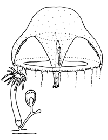
Diagnosis Medusa manubrium small, usually on rather well differentiated gastric peduncle; 4-6 simple radial canals running from circular canal across underside of bell and along peduncle to manubrium; bulbs with or without excretory papillae; margin with or without cirri or marginal warts; gonads on radial canals, separated from manubriuml; 8 to many statocysts; without ocelli.The hydroids of the Eirenidae can be of 'Campanulina', 'Campanopsis' or 'Eugymnanthea' type. Hydroid colony of benthic species stolonal or ramified erect; bivalve-inhabiting species without perisarc, with pedal disc, usually solitary; planktonic species solitary, polyp budding totally into a single medusa; hydrotheca cylindrical in young colonies of erect forms, with diaphragm and folded pleated operculum formed by convergent flaps not demarcated from the hydrothecal rim; in older colonies of this type, operculum generally lost and hydrotheca reduced to perisarcal collar, of haleciid type; hydrotheca usually reduced or absent in stolonal colonies, hydranth naked, borne directly on hydrorhiza or on short pedicels; hydranth of commensal species elongated, extensile, with filiform tentacles in a single amphicoronate whorl; intertentacular web present; gonophores on hydranths, hydrocaulus, or hydrorhiza, naked or more usually at least initially in a gonotheca, in form of medusae or medusoids with gonads on radial canals. [details]

| Language | Name | |
|---|---|---|
| Japanese | マツバクラゲ科 | [details] |
To Biological Information System for Marine Life (BISMaL)
To European Nucleotide Archive, ENA (Eirenidae)
To European Nucleotide Archive, ENA (Eutimidae) (from synonym Eutimidae Haeckel, 1879)
To European Nucleotide Archive, ENA (Irenidae) (from synonym Irenidae Haeckel, 1879)
To Genbank (from synonym Irenidae Haeckel, 1879)
To Genbank (from synonym Eutimidae Haeckel, 1879)
To Genbank
To ITIS
To European Nucleotide Archive, ENA (Eirenidae)
To European Nucleotide Archive, ENA (Eutimidae) (from synonym Eutimidae Haeckel, 1879)
To European Nucleotide Archive, ENA (Irenidae) (from synonym Irenidae Haeckel, 1879)
To Genbank (from synonym Irenidae Haeckel, 1879)
To Genbank (from synonym Eutimidae Haeckel, 1879)
To Genbank
To ITIS