NARMS taxon details
Bathyporeia guilliamsoniana (Spence Bate, 1857)
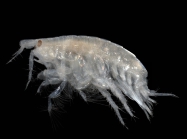
103060 (urn:lsid:marinespecies.org:taxname:103060)
accepted
Species
Bathyporeia megalops Chevreux, 1911 · unaccepted (junior subjective synonym)
Bathyporeia norvegica G.O. Sars, 1892 · unaccepted (junior subjective synonym)
Bathyporeia sunnivae Bellan-Santini & Vader, 1988 · unaccepted (junior subjective synonym)
marine, brackish, fresh, terrestrial
(of ) Bate, C. S. (1857). A synopsis of the British edriophthalmous Crustacea. Part I. Amphipoda. <em>The Annals and Magazine of Natural History, series 2.</em> 19: 135-152.
page(s): 146 [details]
page(s): 146 [details]
Horton, T.; Lowry, J.; De Broyer, C.; Bellan-Santini, D.; Copilas-Ciocianu, D.; Corbari, L.; Costello, M.J.; Daneliya, M.; Dauvin, J.-C.; Fišer, C.; Gasca, R.; Grabowski, M.; Guerra-García, J.M.; Hendrycks, E.; Hughes, L.; Jaume, D.; Jazdzewski, K.; Kim, Y.-H.; King, R.; Krapp-Schickel, T.; LeCroy, S.; Lörz, A.-N.; Mamos, T.; Senna, A.R.; Serejo, C.; Souza-Filho, J.F.; Tandberg, A.H.; Thomas, J.D.; Thurston, M.; Vader, W.; Väinölä, R.; Valls Domedel, G.; Vonk, R.; White, K.; Zeidler, W. (2025). World Amphipoda Database. Bathyporeia guilliamsoniana (Spence Bate, 1857). Accessed through: Costello, M.J.; Bouchet, P.; Boxshall, G.; Arvanitidis, C.; Appeltans, W. (2025) European Register of Marine Species at: https://vliz.be/vmdcdata/narms/narms.php?p=taxdetails&id=103060 on 2025-06-30
Costello, M.J.; Bouchet, P.; Boxshall, G.; Arvanitidis, C.; Appeltans, W. (2025). European Register of Marine Species. Bathyporeia guilliamsoniana (Spence Bate, 1857). Accessed at: https://vliz.be/vmdcdata/narms/narms.php?p=taxdetails&id=103060 on 2025-06-30
Date
action
by
original description
(of Bathyporeia megalops Chevreux, 1911) Chevreux, E. (1911). Campagnes de la "Melita". Les amphipodes d'Algérie et de Tunisie. <em>Mémoires de la Société zoologique de France.</em> 23(3-4): 145-285., available online at https://www.biodiversitylibrary.org/page/15906003#page/5/mode/1up [details]
original description (of Bathyporeia norvegica G.O. Sars, 1892) Sars, G.O. (1891). Amphipoda. Part VI. Pontoporeiidae. An account of the Crustacea of Norway, with short descriptions and figures of all the species. I: 121-140, pls 41-48. Cammermeyer, Christiana (Oslo)., available online at https://www.biodiversitylibrary.org/page/10925792
page(s): 128 [details]
original description (of Bathyporeia sunnivae Bellan-Santini & Vader, 1988) Bellan-Santini, D.; Vader, W. (1988). Nouvelles espèces de <i>Bathyporeia</i> en Méditerranée (Crustacea, Amphipoda). <em>Bollettino del Museo Civico di Storia Naturale di Verona.</em> 14: 229-240. [details]
original description (of ) Bate, C. S. (1857). A synopsis of the British edriophthalmous Crustacea. Part I. Amphipoda. <em>The Annals and Magazine of Natural History, series 2.</em> 19: 135-152.
page(s): 146 [details]
context source (Schelde) Maris, T., O. Beauchard, S. Van Damme, E. Van den Bergh, S. Wijnhoven & P. Meire. (2013). Referentiematrices en Ecotoopoppervlaktes Annex bij de Evaluatiemethodiek Schelde-estuarium Studie naar “Ecotoopoppervlaktes en intactness index”. [Reference matrices and Ecotope areas Annex to the Evaluation methodology Scheldt estuary Study on “Ecotope areas and intactness index”. <em>Monitor Taskforce Publication Series, 2013-01. NIOZ: Yerseke.</em> 35 pp. (look up in IMIS) [details]
context source (BeRMS 2020) Bio-environmental research group; Institute of Agricultural and Fisheries research (ILVO), Belgium; (2015): Macrobenthos monitoring in function of the Water Framework Directive in the period 2007-2009. [details]
basis of record Bellan-Santini, D.; Costello, M.J. (2001). Amphipoda. <em>in: Costello, M.J. et al. (Ed.) (2001). European register of marine species: a check-list of the marine species in Europe and a bibliography of guides to their identification.</em> Collection Patrimoines Naturels 50: pp. 295-308. (look up in IMIS) [details]
additional source Bachelet, G.; Dauvin, J.-C.; Sorbe, J. C. (2003). An updated checklist of marine and brackish water Amphipoda (Crustacea: Peracarida) of the southern Bay of Biscay (NE Atlantic). <em>Cah. Biol. Mar.</em> 44(2): 121-151. (look up in IMIS) [details] Available for editors
additional source Muller, Y. (2004). Faune et flore du littoral du Nord, du Pas-de-Calais et de la Belgique: inventaire. [Coastal fauna and flora of the Nord, Pas-de-Calais and Belgium: inventory]. <em>Commission Régionale de Biologie Région Nord Pas-de-Calais: France.</em> 307 pp., available online at http://www.vliz.be/imisdocs/publications/145561.pdf [details]
additional source d'Udekem d'Acoz, C.; Vader, W. (2005). The Mediterranean Bathyporeia revisited (Crustacea, Amphipoda, Pontoporeiidae), with the description of a new species. <em>Bolletino del Museo Civico di Storia Naturale diVerona (Botanica Zoologia).</em> 29, 3-38. [details] Available for editors
additional source Integrated Taxonomic Information System (ITIS). , available online at http://www.itis.gov [details]
original description (of Bathyporeia norvegica G.O. Sars, 1892) Sars, G.O. (1891). Amphipoda. Part VI. Pontoporeiidae. An account of the Crustacea of Norway, with short descriptions and figures of all the species. I: 121-140, pls 41-48. Cammermeyer, Christiana (Oslo)., available online at https://www.biodiversitylibrary.org/page/10925792
page(s): 128 [details]
original description (of Bathyporeia sunnivae Bellan-Santini & Vader, 1988) Bellan-Santini, D.; Vader, W. (1988). Nouvelles espèces de <i>Bathyporeia</i> en Méditerranée (Crustacea, Amphipoda). <em>Bollettino del Museo Civico di Storia Naturale di Verona.</em> 14: 229-240. [details]
original description (of ) Bate, C. S. (1857). A synopsis of the British edriophthalmous Crustacea. Part I. Amphipoda. <em>The Annals and Magazine of Natural History, series 2.</em> 19: 135-152.
page(s): 146 [details]
context source (Schelde) Maris, T., O. Beauchard, S. Van Damme, E. Van den Bergh, S. Wijnhoven & P. Meire. (2013). Referentiematrices en Ecotoopoppervlaktes Annex bij de Evaluatiemethodiek Schelde-estuarium Studie naar “Ecotoopoppervlaktes en intactness index”. [Reference matrices and Ecotope areas Annex to the Evaluation methodology Scheldt estuary Study on “Ecotope areas and intactness index”. <em>Monitor Taskforce Publication Series, 2013-01. NIOZ: Yerseke.</em> 35 pp. (look up in IMIS) [details]
context source (BeRMS 2020) Bio-environmental research group; Institute of Agricultural and Fisheries research (ILVO), Belgium; (2015): Macrobenthos monitoring in function of the Water Framework Directive in the period 2007-2009. [details]
basis of record Bellan-Santini, D.; Costello, M.J. (2001). Amphipoda. <em>in: Costello, M.J. et al. (Ed.) (2001). European register of marine species: a check-list of the marine species in Europe and a bibliography of guides to their identification.</em> Collection Patrimoines Naturels 50: pp. 295-308. (look up in IMIS) [details]
additional source Bachelet, G.; Dauvin, J.-C.; Sorbe, J. C. (2003). An updated checklist of marine and brackish water Amphipoda (Crustacea: Peracarida) of the southern Bay of Biscay (NE Atlantic). <em>Cah. Biol. Mar.</em> 44(2): 121-151. (look up in IMIS) [details] Available for editors
additional source Muller, Y. (2004). Faune et flore du littoral du Nord, du Pas-de-Calais et de la Belgique: inventaire. [Coastal fauna and flora of the Nord, Pas-de-Calais and Belgium: inventory]. <em>Commission Régionale de Biologie Région Nord Pas-de-Calais: France.</em> 307 pp., available online at http://www.vliz.be/imisdocs/publications/145561.pdf [details]
additional source d'Udekem d'Acoz, C.; Vader, W. (2005). The Mediterranean Bathyporeia revisited (Crustacea, Amphipoda, Pontoporeiidae), with the description of a new species. <em>Bolletino del Museo Civico di Storia Naturale diVerona (Botanica Zoologia).</em> 29, 3-38. [details] Available for editors
additional source Integrated Taxonomic Information System (ITIS). , available online at http://www.itis.gov [details]
 Present Inaccurate Introduced: alien Containing type locality

To Barcode of Life (2 barcodes)
To Biodiversity Heritage Library (29 publications) (from synonym Bathyporeia norvegica G.O. Sars, 1892)
To Biodiversity Heritage Library (5 publications) (from synonym Bathyporeia megalops Chevreux, 1911)
To Biodiversity Heritage Library (8 publications)
To PESI
To PESI (from synonym Bathyporeia megalops Chevreux, 1911)
To PESI (from synonym Bathyporeia norvegica G.O. Sars, 1892)
To PESI (from synonym Bathyporeia sunnivae Bellan-Santini & Vader, 1988)
To USNM Invertebrate Zoology Arthropoda Collection (1 record)
To ITIS
To Biodiversity Heritage Library (29 publications) (from synonym Bathyporeia norvegica G.O. Sars, 1892)
To Biodiversity Heritage Library (5 publications) (from synonym Bathyporeia megalops Chevreux, 1911)
To Biodiversity Heritage Library (8 publications)
To PESI
To PESI (from synonym Bathyporeia megalops Chevreux, 1911)
To PESI (from synonym Bathyporeia norvegica G.O. Sars, 1892)
To PESI (from synonym Bathyporeia sunnivae Bellan-Santini & Vader, 1988)
To USNM Invertebrate Zoology Arthropoda Collection (1 record)
To ITIS
