WoRMS name details
Scaridae Rafinesque, 1810
125557 (urn:lsid:marinespecies.org:taxname:125557)
unaccepted > superseded rank
Family
- Subfamily Sparisomatinae Gill, 1893 accepted as Sparisomatini Gill, 1893 (unaccepted > superseded rank)
marine, brackish, terrestrial
Not documented
Description Chiefly tropical. Distribution: Atlantic, Indian, and Pacific Oceans. Jaw teeth fused or parrotlike. Spines in dorsal fin 9;...
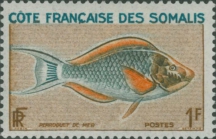
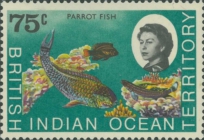
Description Chiefly tropical. Distribution: Atlantic, Indian, and Pacific Oceans. Jaw teeth fused or parrotlike. Spines in dorsal fin 9; soft rays 10. Three spines in anal fin; soft rays 9. One spine in pelvic; soft rays 5. Caudal fin with 11 branched rays. Scales large; cycloid. Lateral line with usually 22-24 scales. Vertebrae 25. Herbivorous, usually scraping algae from dead coral substrates. At night, some species rest enveloped in their mucoid secretion. Sex change seems a common occurence, with the females either primary or secondary in most species. Many species could be identified by their live coloration but this may be lost in preservation, or can vary between juveniles and adults and with sex change. [details]
Froese, R. and D. Pauly. Editors. (2026). FishBase. Scaridae Rafinesque, 1810. Accessed through: World Register of Marine Species at: https://www.marinespecies.org/aphia.php?p=taxdetails&id=125557 on 2026-10-05
Date
action
by
 The webpage text is licensed under a Creative Commons
Attribution 4.0 License
Nomenclature
basis of record
van der Land, J.; Costello, M.J.; Zavodnik, D.; Santos, R.S.; Porteiro, F.M.; Bailly, N.; Eschmeyer, W.N.; Froese, R. (2001). Pisces, <B><I>in</I></B>: Costello, M.J. <i>et al.</i> (Ed.) (2001). <i>European register of marine species: a check-list of the marine species in Europe and a bibliography of guides to their identification. Collection Patrimoines Naturels,</i> 50: pp. 357-374 (look up in IMIS) [details]
Taxonomy
taxonomy source
Van Der Laan, R.; Eschmeyer, W. N.; Fricke, R. (2014). Family-group names of Recent fishes. <em>Zootaxa.</em> 3882(1): 1-230., available online at https://doi.org/10.11646/zootaxa.3882.1.1 [details] Available for editors  [request]
Other
context source (PeRMS)
Chirichigno, N.; Cornejo, M. (2001). Catálogo comentado de los peces marinos del Perú. <em>2ª ed. Instituto del Mar de Perú. Publicación Especial. Callao.</em> 314 p. [details]
additional source Fricke, R., Eschmeyer, W. N. & Van der Laan, R. (eds). (2026). ECoF. Eschmeyer's Catalog of Fishes: Genera, Species, References. <em>California Academy of Sciences. San Francisco.</em> Electronic version accessed dd mmm 2026., available online at http://researcharchive.calacademy.org/research/Ichthyology/catalog/fishcatmain.asp [details]
additional source Fricke, R., Eschmeyer, W. N. & Van der Laan, R. (eds). (2026). ECoF. Eschmeyer's Catalog of Fishes: Genera, Species, References. <em>California Academy of Sciences. San Francisco.</em> Electronic version accessed dd mmm 2026., available online at http://researcharchive.calacademy.org/research/Ichthyology/catalog/fishcatmain.asp [details]
 Present Inaccurate Introduced: alien Containing type locality
Unreviewed
Description Chiefly tropical. Distribution: Atlantic, Indian, and Pacific Oceans. Jaw teeth fused or parrotlike. Spines in dorsal fin 9; soft rays 10. Three spines in anal fin; soft rays 9. One spine in pelvic; soft rays 5. Caudal fin with 11 branched rays. Scales large; cycloid. Lateral line with usually 22-24 scales. Vertebrae 25. Herbivorous, usually scraping algae from dead coral substrates. At night, some species rest enveloped in their mucoid secretion. Sex change seems a common occurence, with the females either primary or secondary in most species. Many species could be identified by their live coloration but this may be lost in preservation, or can vary between juveniles and adults and with sex change. [details]
Unreviewed